



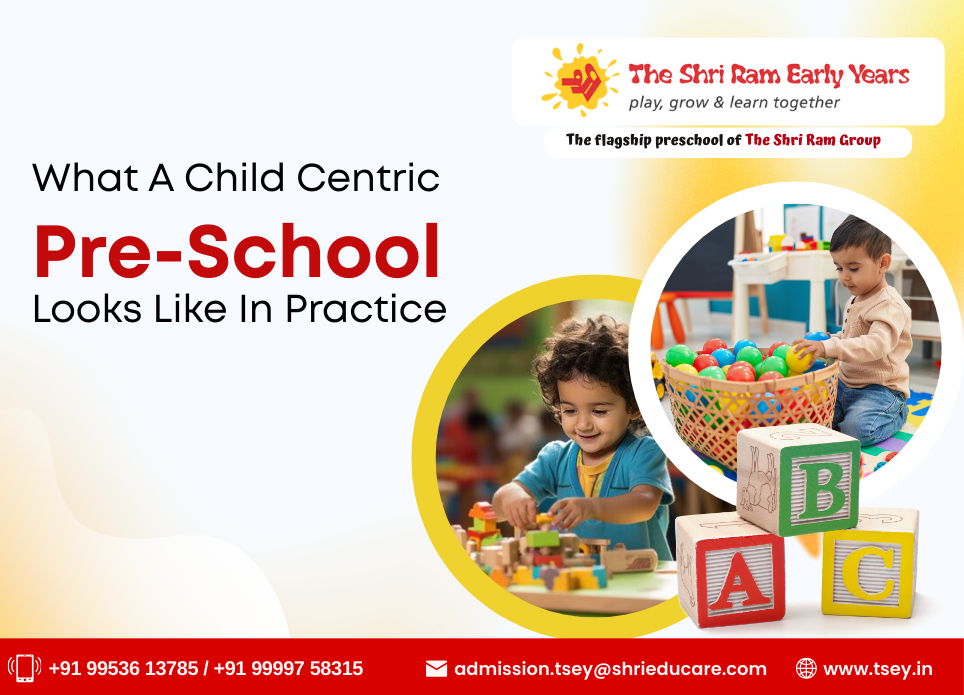
What A Child Centric Pre-School Looks Like In Practice
Early childhood education shapes how children experience adults, spaces, and routines much before formal learning begins. In a genuinely child centric environment, these influences are subtle rather than declared. Nothing feels staged or performative. The approach becomes visible in how adults pause to listen, how transitions are handled without urgency, and how children are given time to respond.
Such spaces treat children as individuals with their own emotions and preferences. Learning grows through steady relationships and everyday trust, allowing development to unfold without pressure or comparison.
Teaching Practices Rooted in Observation and Respect
Child centric teaching depends on careful observation rather than rigid instruction. Educators study how children respond, interact, and express understanding.
They adjust pace based on readiness, not schedules. Questions guide learning rather than instructions alone. Mistakes are treated as part of exploration, not correction moments. This approach builds trust between child and teacher.
Within a preschool in Gurgaon setting, this sensitivity helps children settle smoothly. Children feel seen rather than evaluated.
Emotional Safety as A Daily Priority
Emotional security supports every form of learning. Child centric environments prioritise emotional wellbeing throughout the day.
Teachers acknowledge feelings with patience. Transitions receive attention, not haste. Comfort routines remain consistent. Conflict becomes an opportunity for emotional guidance.
These practices reduce anxiety and encourage self expression. Children develop confidence in sharing thoughts and needs respectfully.
Play Experiences with Purpose and Meaning
Play in child centric settings carries intention without becoming rigid. Activities encourage thinking, cooperation, and imagination. After thoughtful planning, educators offer structured freedom. Children choose how long they engage and how they explore materials.
Key characteristics of purposeful play include:
- Activities that support problem solving through hands on exploration
- Opportunities for social interaction and shared decision making
- Quiet play options that respect individual temperaments
- Open ended materials that encourage creativity rather than fixed outcomes
Such play builds cognitive strength while respecting emotional rhythms.
Language Development Through Conversation and Listening
Language learning grows through conversation rather than repetition alone. Teachers model respectful dialogue and attentive listening.
Children receive time to express thoughts fully. Questions remain open rather than limiting. Stories invite discussion, not recall tests. Songs encourage participation without performance pressure.
This approach supports vocabulary growth and confident expression. Children learn that their words hold value.
Care Routines That Support Independence
Daily routines form a significant part of early childhood experience. Child centric environments treat care routines as learning moments.
After gentle guidance, children practise self help skills gradually. Hand washing, meal times, and rest periods follow predictable rhythms. Support remains available without taking control.
Key elements of supportive care routines include:
- Encouraging independence at a comfortable pace
- Respecting personal boundaries during care moments
- Maintaining consistency to build trust and security
- Responding calmly to resistance or hesitation
In a day care in Gurgaon context, such routines help children balance care with autonomy.
The Role of Educators as Emotional Anchors
In child centric classrooms, teachers are not positioned as controllers of behaviour. They are present as steady adults whom children learn to rely on. Their voices remain even. Their responses stay consistent. When a child struggles, the focus shifts to understanding what caused the moment, not correcting it quickly. That sense of emotional safety shapes how comfortably a child thinks and participates.
Connection comes first, long before formal instruction begins. Children respond when they feel recognised, not managed. Educators show patience during repeated questions and unfinished attempts. They model calm behaviour during disagreement or disappointment. Over time, this consistency builds trust. Children learn they can explore freely, make errors, and return for support without fear or embarrassment.
Parent Partnerships Built on Transparency
Child centric practice extends beyond classroom walls. Strong communication with families supports continuity between home and school.
Educators share observations rather than comparisons. Concerns are discussed early with sensitivity. Progress is described through behaviour and engagement, not labels.
Parents feel informed and involved. Children benefit from aligned expectations and shared understanding.
Conclusion
Preparation for formal schooling does not rely on academic pressure. It grows through emotional strength, independence, and curiosity. Children learn to follow routines, communicate needs, and work with peers. These skills support smoother transitions into structured learning environments.
Such foundations reflect values upheld across the Shri Ram education ecosystem. They align naturally with the educational philosophy associated with The Shri Ram Early Years (TSEY).
A child centric preschool prepares children for life, not only the next classroom.


