



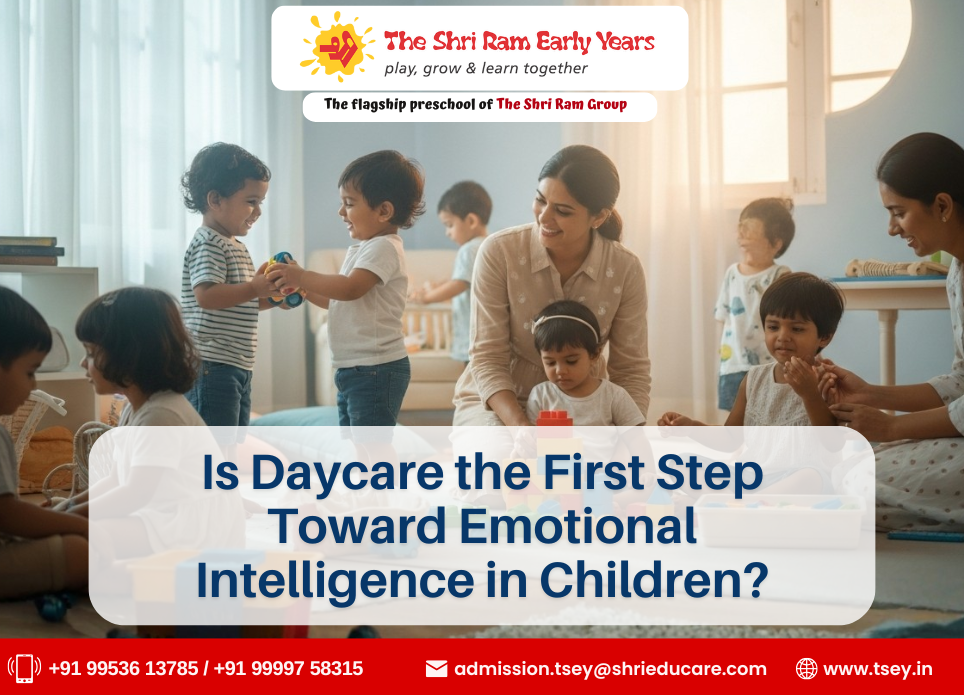
Parents often wonder how early they should start shaping their child’s emotional world. You hear so many opinions, yet the real question stays the same. What kind of environment helps young children understand their feelings in a safe and natural way. Many families now look at a day care in Gurgaon because they want a warm, structured space where their child can grow beyond academics. Is daycare the quiet but powerful first step toward emotional intelligence. Let us explore this with an open mind.
What Emotional Intelligence Really Means for Young Children
Emotional intelligence is not a big or difficult concept for young children. It is simply the ability to notice feelings, express them in a healthy manner, and understand the emotions of people around them. Children who develop this early do better in friendships, classroom interactions, and everyday decision making. They gain confidence because they know how to manage their reactions instead of feeling overwhelmed. These abilities form the core of their social and academic growth in the best schools in India.
How Daycare Encourages Early Emotional Development
Children Learn Through Everyday Social Interactions
Think about the tiny moments that take place in a daycare setting. One child wants a toy. Another child already has it. A small disagreement follows. These everyday situations help children learn patience and cooperation. They understand the idea of taking turns. They explore the meaning of sharing and kindness. These experiences, repeated throughout the day, build emotional awareness in a natural and gentle way.
Caregivers Model Healthy Emotional Responses
Children observe everything. They watch how adults speak, move, and respond to challenges. In a well managed daycare, caregivers respond with patience and clarity. They do not raise their voice. They do not dismiss a child’s feelings. Instead, they guide children with calm explanations and warm encouragement. Children absorb this behaviour. They begin to emulate it. This is how they learn to express their emotions in a balanced way.
Familiar Routines Create Emotional Stability
Routine sounds simple, yet it builds a deep sense of emotional safety. When children know what will happen next, they feel secure. They trust their environment. This trust reduces anxiety and improves focus. Meal time, play time, nap time, and activity time follow a consistent pattern, which helps children understand the world in an organised manner. This stability strengthens their emotional foundation.
Group Settings Teach Children to Understand Differences
In daycare, children meet peers with different temperaments and personalities. Some children are very active. Some are quiet. Some feel shy. Some love speaking. Children learn that everyone feels differently. They start understanding that their emotions are not the only emotions in the room. This simple realisation is the first step toward empathy.
Key Signs Daycare Strengthens Emotional Intelligence
Better Control Over Big Emotions
With regular guidance, children learn to manage emotional waves in a better way. The number of temper tantrums reduces. They pause before reacting. They express disappointment with words instead of crying. These are strong signs of growing emotional maturity.
Growing Confidence in Social Situations
Children in daycare often show more confidence in groups. They walk into classrooms comfortably. They greet others with ease. They initiate little conversations. They join group activities without fear. This confidence forms a strong emotional base for later school years.
Improvement in Sharing, Turn Taking, and Helping
You will notice that your child becomes more willing to share toys, wait for their turn, or help a friend. These gestures may look small, yet they reflect deep emotional understanding. They show that the child recognises the feelings of others and responds with kindness.
What Parents Can Do to Support This Growth at Home
Talk Openly About Feelings
Your child needs to hear words that match emotions. When you say things like “You look upset” or “You seem excited” your child learns to identify each feeling. This helps them speak about emotions clearly.
Maintain Consistent Routines
A stable routine at home supports the routine they follow in daycare. Children thrive when their day feels predictable. Morning rituals, bedtime habits, and regular family time contribute to emotional stability.
Appreciate and Acknowledge Their Efforts
When your child shows empathy or expresses emotions calmly, acknowledge it. Simple appreciation encourages the behaviour. It teaches your child that emotional balance is a strength.
Should Every Child Start with Daycare for Emotional Intelligence?
Daycare offers a strong start, but it is not the only path. Some children thrive at home with supportive parenting. Others benefit from the gentle structure of a daycare setting. Emotional development depends on consistent guidance, open communication, and a loving environment. Every child grows at their own pace. The goal is to choose a setting that nurtures their emotional and social abilities with care.
Conclusion
The right daycare environment gives children a safe place to discover feelings, manage emotions, and build empathy with confidence. These experiences shape their ability to understand others and express themselves with clarity. The Shri Ram Early Years brings this balance through thoughtful routines, caring educators, and a warm learning environment. We focus on emotional wellbeing as much as learning outcomes, which makes us the best school in the area.


