



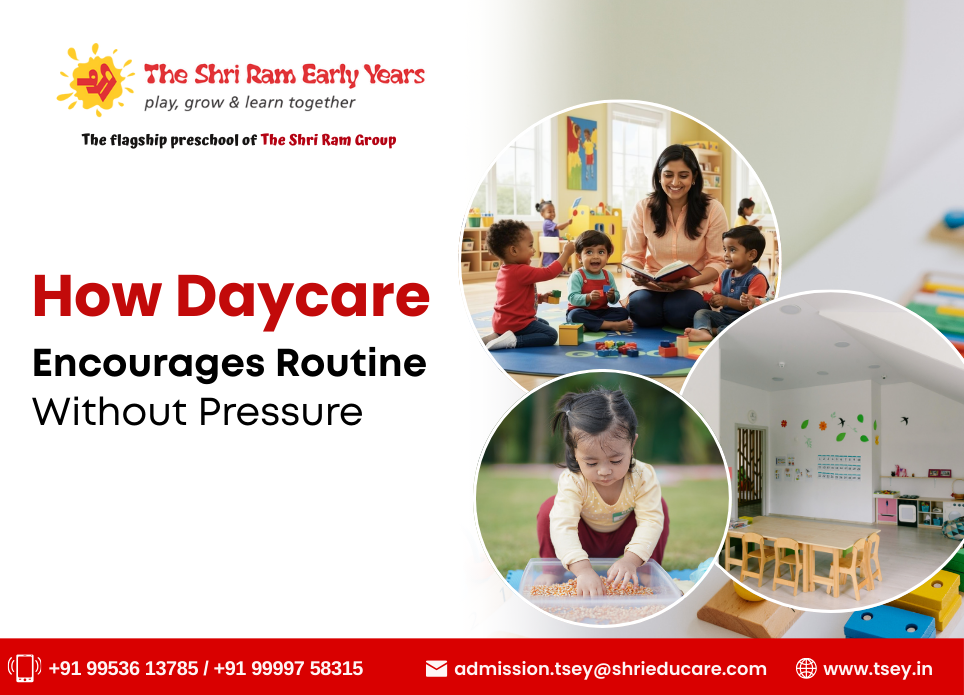
How Daycare Encourages Routine Without Pressure
Routine shapes early childhood, yet pressure can quietly undo its benefits during formative developmental years. Daycare environments succeed when structure feels reassuring rather than demanding or performance driven.
Parents increasingly seek spaces where rhythm develops naturally, without rigid expectations or forced compliance. This discussion explores how thoughtfully designed daycare nurtures routine through emotional security, not control.
Understanding Routine As Emotional Safety, Not Discipline
Routine works best when children associate predictability with comfort, not correction or constant adult supervision. Daycare settings support this by repeating daily patterns that children begin to recognise intuitively.
Arrival rituals, meal timings, rest periods, and play transitions follow steady cues without verbal enforcement. Children respond to these signals because consistency reduces anxiety and supports emotional regulation. Such environments mirror healthy home rhythms, creating continuity rather than contrast between care spaces.
Routine Without Rigidity for Balance of Structure and Freedom
A good daycare routine gives children structure without making them feel confined. It keeps the day familiar while allowing space for natural changes and moods. At The Shri Ram Early Years (TSEY), children are not hurried through activities to meet strict timings, and transitions are handled calmly to help children move forward without pressure.
A story often flows naturally into snack time without sudden breaks, and outdoor play continues as long as children remain engaged and comfortable. Teachers observe the group and respond, rather than stopping activities by the clock. This balanced approach supports emotional, social, and cognitive growth by shaping routines around children’s needs instead of imposing them.
How Gentle Transitions Build Trust and Self Regulation
Transitions often trigger resistance when they feel abrupt or externally imposed. High quality daycare uses soft markers like music, lighting changes, or calm verbal cues. These signals prepare children mentally before activities change, reducing emotional friction.
Trust develops when children feel respected during movement from one activity to another. Over time, children begin anticipating transitions independently, which supports self regulation skills naturally.
The Role of Play Based Structure in Daily Rhythm
Play anchors routine without turning schedules into rigid frameworks that restrict curiosity or autonomy. In balanced daycare models, free play alternates with guided activities at predictable intervals.
Children begin recognising patterns through experience rather than instruction or correction. This approach aligns well with families exploring nursery admissions in Gurgaon, where balance matters deeply. Play based rhythm allows learning moments to emerge organically, without constant adult direction.
Why Consistency Without Comparison Protects Confidence
Routine loses value when children feel measured against peers or behavioural benchmarks. Effective daycare environments avoid comparative language and performance based rewards. Each child progresses within the same framework, yet at an individual emotional pace.
Confidence grows because routine becomes a personal anchor, not a public test. This philosophy reflects best practices observed across progressive preschool school models globally.
How Educators Maintain Structure Without Control
Educators play a central role in sustaining routine while preserving emotional autonomy. They observe patterns, adjust pacing, and respond to cues rather than enforcing strict timelines. After establishing rhythm, guidance becomes subtle, almost invisible to the child. This professional sensitivity distinguishes supportive care from custodial supervision models.
Daily Patterns That Encourage Independence
Daily patterns encourage children to participate actively in their own routines. These patterns remove pressure by allowing gradual mastery without correction driven urgency.
- Children choose activities within structured time blocks, reinforcing autonomy alongside predictability.
- Clean up routines follow play naturally, guided by shared participation rather than instruction.
- Rest periods respect individual readiness while remaining consistent within the group framework.
Emotional Security as The Foundation of Routine
Routine flourishes when children feel emotionally held rather than managed. This emotional foundation allows consistency to feel safe, not restrictive or controlling.
- Familiar caregivers provide continuity, reducing emotional disruption during daily transitions.
- Calm responses to resistance reassure children that routine adapts, rather than punishes.
- Predictable emotional reactions teach children what to expect from adults consistently.
Why Pressure Free Routine Supports Long Term Development
Children who experience routine without pressure internalise structure as a supportive life skill. They carry this sense of order into later academic and social environments confidently. Such children show improved emotional regulation, adaptability, and independence across developmental stages. Daycare becomes a preparatory space for life rhythms, not an early compliance training ground.
Conclusion
Daycare succeeds when routine emerges from trust, repetition, and emotional respect rather than authority. This philosophy aligns with the early learning values reflected by The Shri Ram Early Years (TSEY). Parents seeking environments that honour childhood rhythm will appreciate approaches grounded in calm consistency. At TSEY, we reflect this belief through practices that place emotional safety before structure.


